Taiwan is not just a market for chocolate. It is a land capable of growing fine cacao and developing distinctive flavors and refined chocolate craftsmanship.
From cultivation and estate management in Pingtung’s cacao region to fermentation, drying, roasting and chocolate making, Taiwan has gradually built a cacao value chain with a character of its own. Combining the terroir of different estates with the skills of artisans and a spirit of innovation, it expresses a chocolate flavor and culture that is distinctly Taiwanese.
History of Taiwan Cacao
From a seed from afar to a new landscape on Taiwanese soil.
The story of Taiwan cacao dates back to its introduction and trial planting in the early twentieth century. After early limitations, Pingtung farmers began dedicating themselves to cultivation, processing techniques matured, and local industry development gained momentum. Step by step, cacao grew from an agricultural experiment into a distinctive industry with real brand value.
This journey is not only a change in what was grown. It is the story of farmers, artisans and local teams searching together for new possibilities.
Key moments for Taiwan cacao
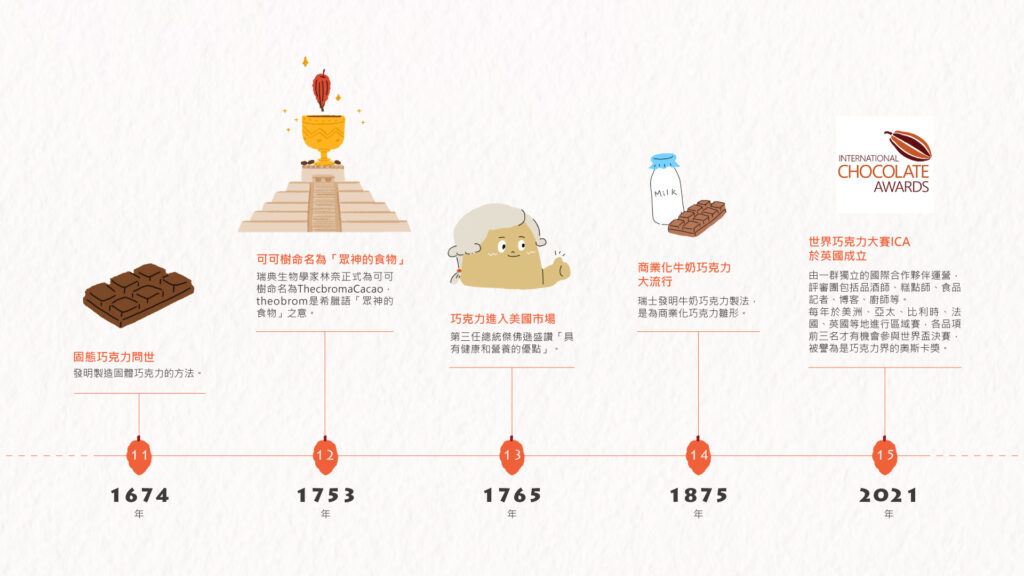
- 1922 | Cacao is introduced to Taiwan for trial planting, its first encounter with the island.
- Around 2003 | Farmers in Neipu, Pingtung, begin cultivating cacao, marking the starting point of the modern Pingtung cacao industry.
- Today | From cultivation, fermentation and drying to chocolate making, more than thirty cacao farms and chocolate brands now operate across sixteen townships in Pingtung.
From the Amazon to the world: the journey of chocolate
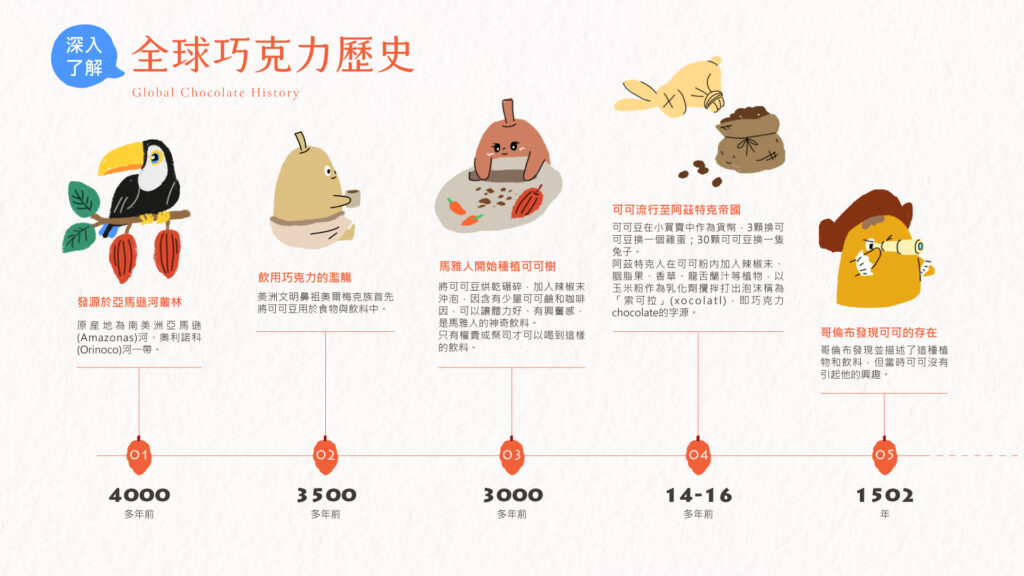
Cacao is native to the Amazon and Orinoco river basins of South America. Long before it reached Taiwan, it had already traveled for thousands of years.
- About 4,000 years ago | The Olmecs of the Americas are the first to use cacao beans in food and drink.
- About 3,500 years ago | The Maya begin cultivating cacao trees, brewing dried, ground beans with chili into a drink reserved for nobles and priests.
- 14th–16th centuries | The Aztec Empire uses cacao beans as currency and prepares a drink called “xocolatl”, the origin of the word chocolate.
- 1502 | Columbus encounters and records cacao.
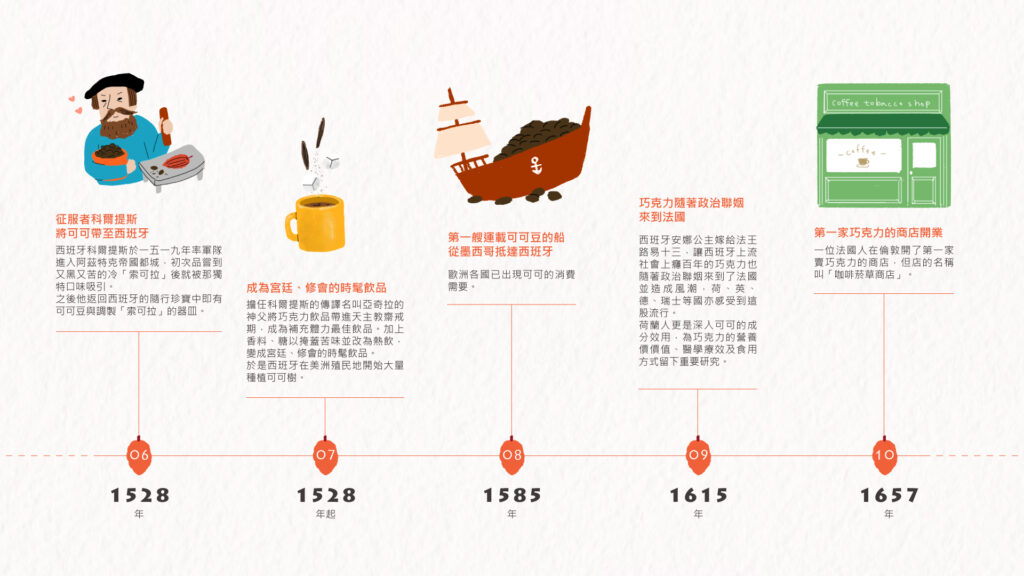
- 1528 | Cortés brings cacao beans and preparation tools back to Spain. Sweetened, spiced and served hot, cacao becomes the fashionable drink of royal courts and monasteries.
- 1585 | The first ship carrying cacao beans arrives in Spain from Mexico.
- 1615 | Princess Anne of Spain marries King Louis XIII of France, bringing chocolate to France and setting off a craze across Europe.
- 1657 | A Frenchman opens the first shop selling chocolate in London.
- 1753 | Linnaeus names the cacao tree Theobroma cacao, meaning “food of the gods”.
Four inventions that shaped modern chocolate
- 1828 · Cocoa powder | Dutchman Van Houten develops a method to remove part of the cocoa butter and neutralize acidity with alkali, making cacao easy to dissolve and affordable for all.
- 1847 · Solid chocolate | Englishman Fry adds cocoa butter and sugar to cocoa liquor, creating chocolate that can be eaten as a solid bar.
- 1875 · Milk chocolate | Swiss Daniel Peter uses the milk powder invented by his friend Henri Nestlé to create the world’s first milk chocolate.
- 1879 · Conching | Swiss Rudolf Lindt develops conching, a long stirring process that gives chocolate its smooth, melt-in-the-mouth texture.
Pingtung Cacao Origins
22 degrees north: where Taiwan cacao’s terroir begins.
Located in southern Taiwan, Pingtung has a warm climate and a diverse agricultural environment well suited to cacao. From Neipu and Wanluan to Gaoshu, farmers have developed cacao farms with distinct characters through different cultivation methods and local know-how.
Visiting the origin means discovering more than cacao varieties and growing methods. It is where agricultural landscapes, local culture and industry life meet.
At the northern edge of the cacao belt
Cacao trees grow only in the tropics, within about 20 degrees of the equator. They need an average temperature of around 27°C, more than 1,000 mm of rain a year, and land between 30 and 300 meters above sea level. At 22 degrees north, Pingtung sits at the very edge of this cacao belt, where warmth and abundant rain allow cacao to take root in Taiwan.
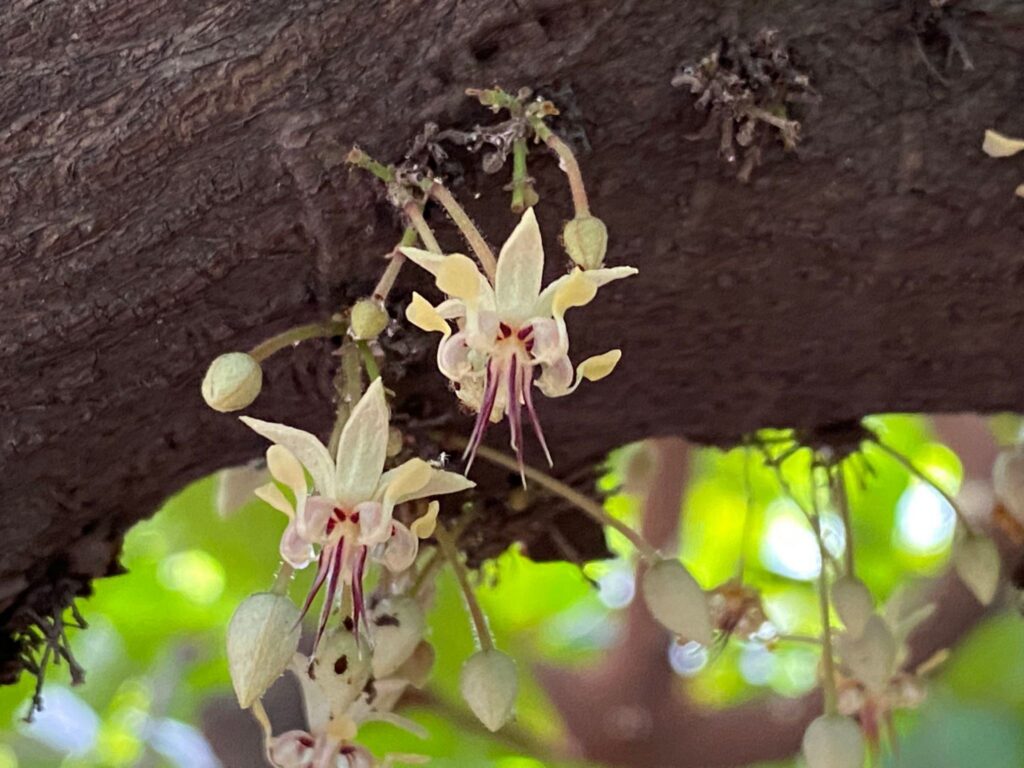
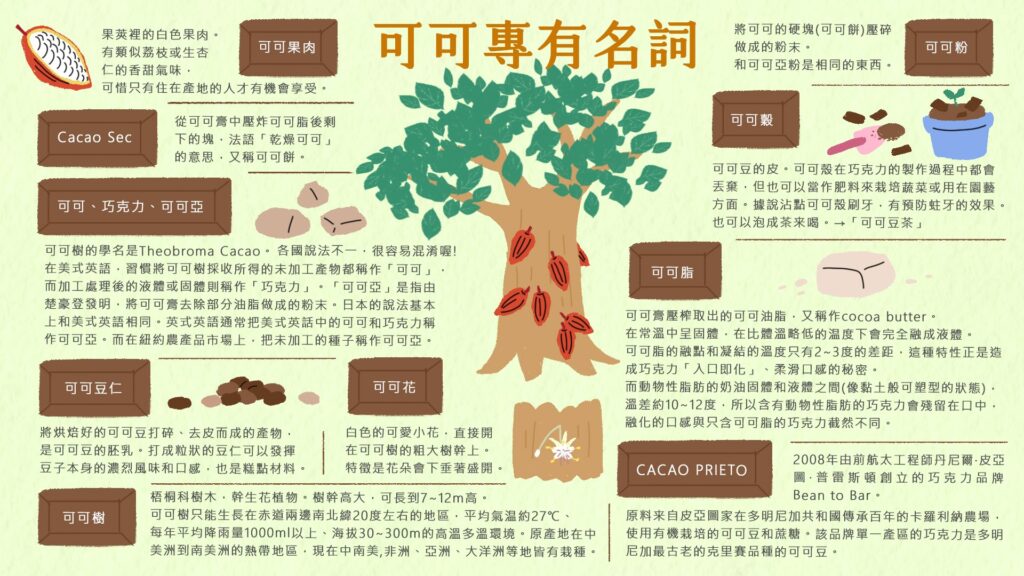
Cacao is cauliflorous: its small white flowers bloom directly on the thick trunk, and the pods grow from the trunk too. It is the sight first-time visitors to a cacao farm remember most.
See the Brands page for cacao farms and brands by township.
From Cacao to Chocolate
How many steps lie hidden in a single bar of chocolate?
From harvesting ripe cacao pods to fermenting, drying, roasting and grinding the beans, then conching, tempering and molding the chocolate, every detail can shape its flavor and texture.
Through a clear introduction to the process, we help readers understand the link between origin, processing and chocolate making, and rediscover the value of craftsmanship.
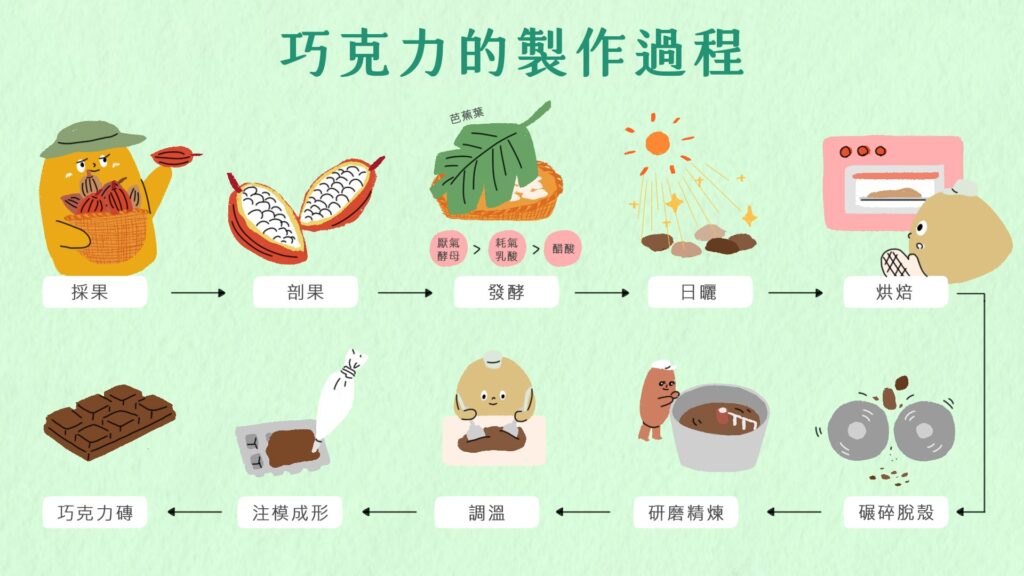
Ten steps from cacao pod to chocolate
- Harvesting | Ripe pods are cut from the trunk one by one, by hand.
- Opening the pods | The pods are split open to reveal the beans wrapped in white pulp.
- Fermentation | Beans and pulp are covered with banana leaves and pass through yeast, lactic acid and acetic acid stages. This is where the foundation of chocolate flavor is formed.
- Sun drying | The beans are turned under the sun and dried slowly.
- Roasting | Roasting at the right temperature awakens the aroma of the beans.
- Cracking and winnowing | The beans are cracked and the shells removed, leaving the cacao nibs.
- Grinding and conching | Long grinding and stirring make the texture ever finer and smoother.
- Tempering | Precise temperature control gives chocolate its gloss and crisp snap.
- Molding | The chocolate is poured into molds to set.
- The bar | Released from the mold, it becomes a finished bar of chocolate.
The three main cacao varieties
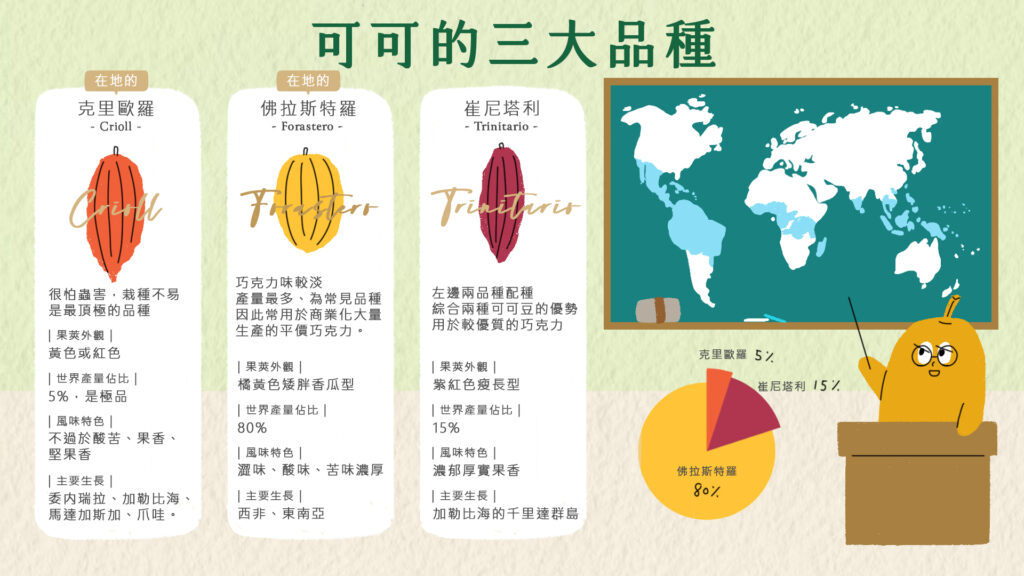
- Criollo | The finest variety. Vulnerable to pests and difficult to grow, it makes up only about 5% of world production. Mild in bitterness and acidity, with fruity and nutty notes. Grown mainly in Venezuela, the Caribbean, Madagascar and Java.
- Forastero | The most widely grown variety, about 80% of world production, used mostly for mass-produced chocolate. Stronger in astringency, acidity and bitterness. Grown mainly in West Africa and Southeast Asia.
- Trinitario | A cross of the two, combining the strengths of both. About 15% of world production and often used in fine chocolate. Rich, full-bodied and fruity, originating in Trinidad in the Caribbean.
A few cacao terms
- Cacao pulp | The white flesh surrounding the beans, sweet and fragrant like lychee. It can only be tasted at origin.
- Cacao nibs | Roasted beans cracked and shelled, keeping the bean’s intense flavor and texture. Often used in pastry.
- Cocoa butter | The fat pressed from cocoa liquor. It melts just below body temperature, and its melting and setting points are only 2–3 degrees apart, the secret behind chocolate that melts in the mouth.
- Cocoa powder | Ground from the cocoa cake left after pressing out the cocoa butter.
- Cacao husk | The outer shell of the bean, used as fertilizer or brewed as cacao husk tea.
Sustainability & Community
Letting a single cacao bean create more possibilities for the community.
The value of the cacao industry goes beyond chocolate itself. Through cultivation, processing, brand development, food and agricultural education, and tourism, cacao can connect different generations and professions and bring new direction to local industries.
We focus on land use, agricultural transformation, youth participation and resource circulation, documenting how Taiwan’s cacao industry explores ways of working that balance quality, the environment and local life.
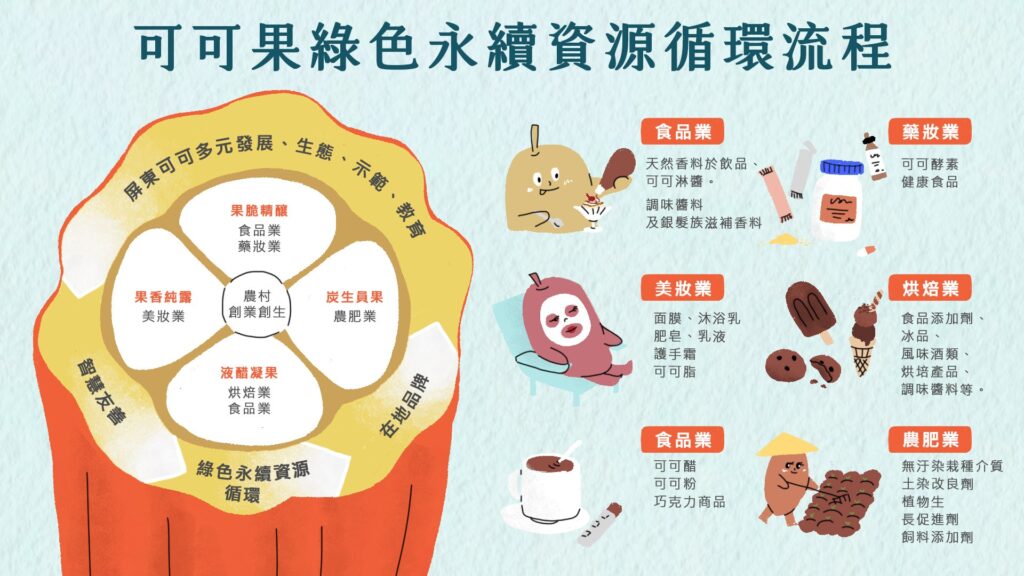
Every part of the pod, put to use
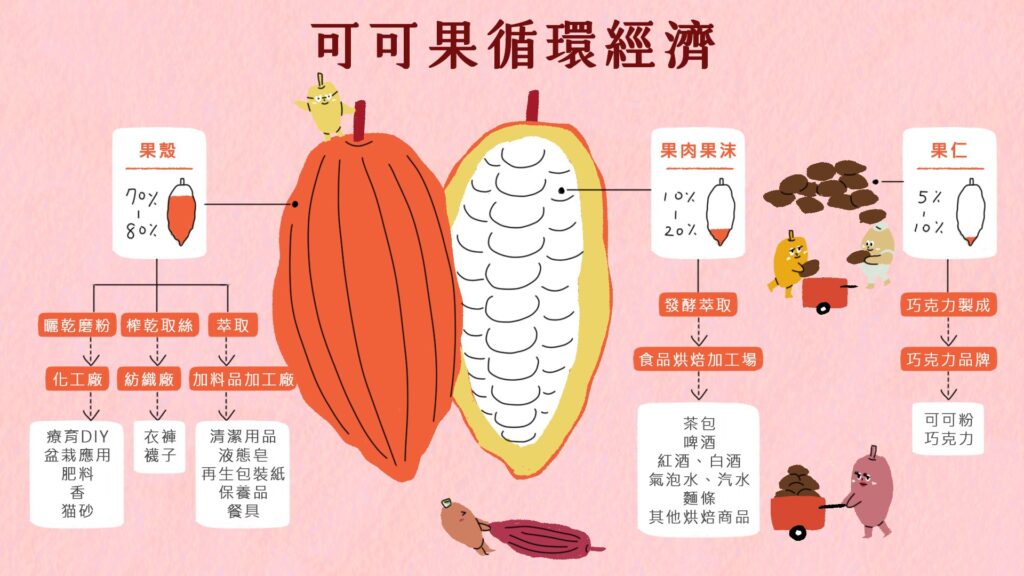
The beans used to make chocolate account for only 5% to 10% of the whole pod. In Pingtung, the husk and pulp are finding new uses too.
- Husk (about 70–80%) | Dried and ground, pressed into fiber or extracted, it becomes fertilizer, potting material, craft kits, clothing and socks, cleaning products, recycled packaging, skincare and tableware.
- Pulp (about 10–20%) | Fermented and extracted, it is made into tea, beer, wine, sparkling drinks, noodles and baked goods.
- Beans (about 5–10%) | Made into cocoa powder and chocolate by local brands.
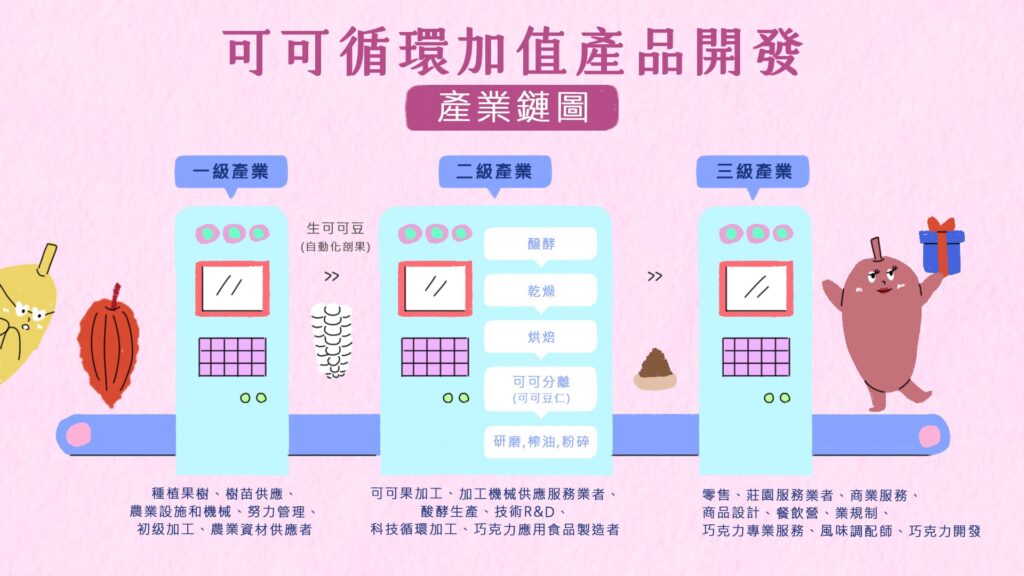
Connecting primary, secondary and tertiary industries
From planting, seedlings and farm supplies, to fermentation, roasting, grinding and food processing, to retail, farm tourism, product design and professional chocolate services, cacao is building a complete value chain in Pingtung.
Food, bakery, beauty, personal care and agricultural sectors are also finding ways to work with local cacao, through cocoa butter, cacao vinegar, cocoa powder and the reuse of the whole pod.